Rising Fuel Prices Accelerate EV Shift: Ather Energy Sees Strong Uptick in Demand in Nepal



Rising petrol prices in Nepal are no longer just a cost concern for daily commuters—they are actively reshaping how mobility is evaluated. For electric scooter manufacturers, the shift has moved beyond gradual adoption curves into visible, real-time demand acceleration.
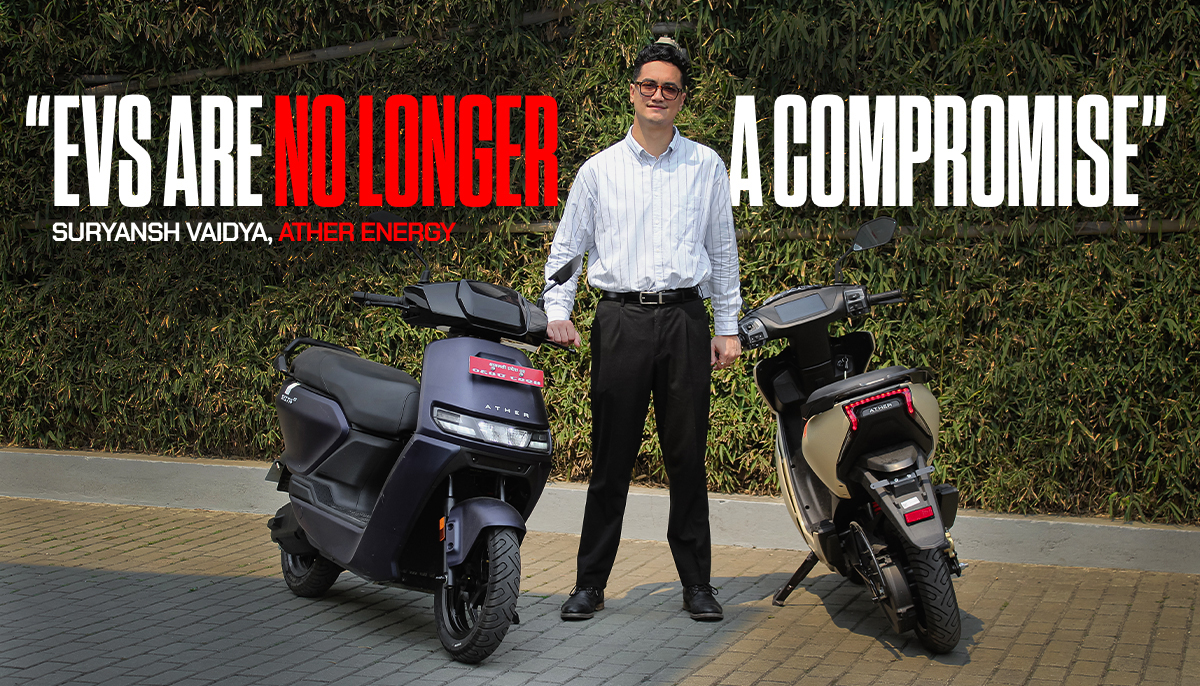
According to Suryansh Vaidya, CEO of Vaidya Energy, the company representing Ather Energy in Nepal, this change is being driven by measurable behavioural shifts rather than sentiment alone.
“As a data-led organization, we analyze consumer behavior at a highly granular level,” he explains. “One of the most encouraging trends we’ve observed is a 30% increase in the lead-to-prospected customer conversion ratio.”


The signal is clear: Nepali consumers are no longer simply exploring electric mobility—they are actively considering it as a viable replacement.
Just a year ago, the market landscape told a very different story. “The EV-to-ICE ratio stood at approximately 3% EV versus 97% ICE,” Vaidya notes. The imbalance, he argues, was less about product capability and more about systemic constraints—limited charging infrastructure, weak brand trust, and an underdeveloped ownership ecosystem.
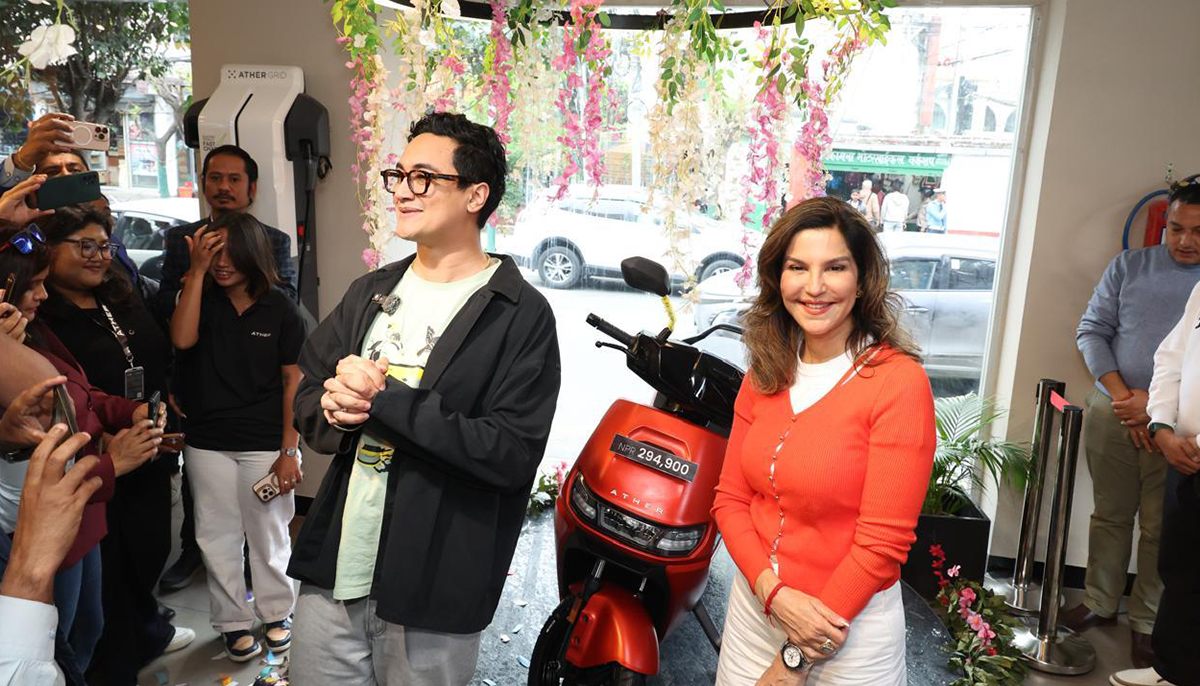
Ather recently launched the Rizta S in Nepal, priced at NPR 2,94,900
Over the past 15 months, Ather has moved to directly address these friction points. The company has doubled its service network, deployed more than 35 fast chargers, and introduced extended warranty programs aimed at strengthening long-term ownership confidence.
“Our approach is simple: remove friction, build trust, and reinvest aggressively into the ownership ecosystem,” Vaidya says. “That is what enables customers who are curious about EVs to confidently take the leap.”
With fuel prices continuing their upward trajectory, the economics of entry-level mobility are shifting decisively. Total cost of ownership is no longer a secondary consideration—it is becoming the defining purchase criterion.
In this context, the Ather Rizta S, priced at NPR 2,94,900, is positioned deliberately close to mainstream ICE scooters, while significantly undercutting them on running costs.
“On average, customers can save approximately NPR 6,800 per month—that is Rs. 81,600 a year and Rs. 6,52,800 over eight years on fuel alone,” Vaidya explains. “At this point, EVs are no longer a compromise—they are becoming the most rational and accessible choice.”
Sales momentum has begun to reflect this shift. Ather reports a clear uptick in demand following recent fuel price increases, though the company is quick to frame this as structural rather than reactive.
“We have been preparing for this transition from the very beginning,” Vaidya says. “Our strategy has always been long-term, and as the market accelerates, we are not just responding—we are scaling up infrastructure and ownership support.”
He expects continued volatility in fuel prices to further accelerate adoption in the months ahead. Yet, he also underscores a more important point: resilience of value.
“Even if fuel prices stabilise, the value proposition of EV ownership must remain strong enough to eliminate buyer’s remorse,” he notes. “What we are witnessing is not just a reaction to fuel prices, but a broader economic and geopolitical shift.”
On pricing, Vaidya acknowledges that EVs have historically carried a premium due to higher component costs. However, Nepal is now entering a decisive phase of convergence.
“We are now seeing prices steadily decline, with some models even falling below the NPR 3 lakh threshold,” he says. “This is a critical inflection point.”
At this level, the decision-making framework is evolving. Buyers are no longer anchored solely to upfront cost—they are increasingly evaluating lifetime value, efficiency, and total ownership economics.
“When we first introduced the Ather 450X, the market context was very different,” he reflects. “Today, with rising fuel costs and broader economic uncertainty, consumers are prioritising ownership value over initial price.”
On the supply side, demand acceleration has introduced operational strain. Ather and its partners are actively working to compress lead times and streamline delivery cycles.
“There may be short-term delays, but this is a transitional phase,” Vaidya says. “Customers who make the switch now will benefit significantly in the long run—through lower operating costs and a fundamentally more efficient mobility experience.”
In Nepal’s evolving mobility landscape, the question is no longer whether consumers will shift to electric—but how quickly the ecosystem can keep pace with them.